
Pilgrimage as a Special Form of Tourism
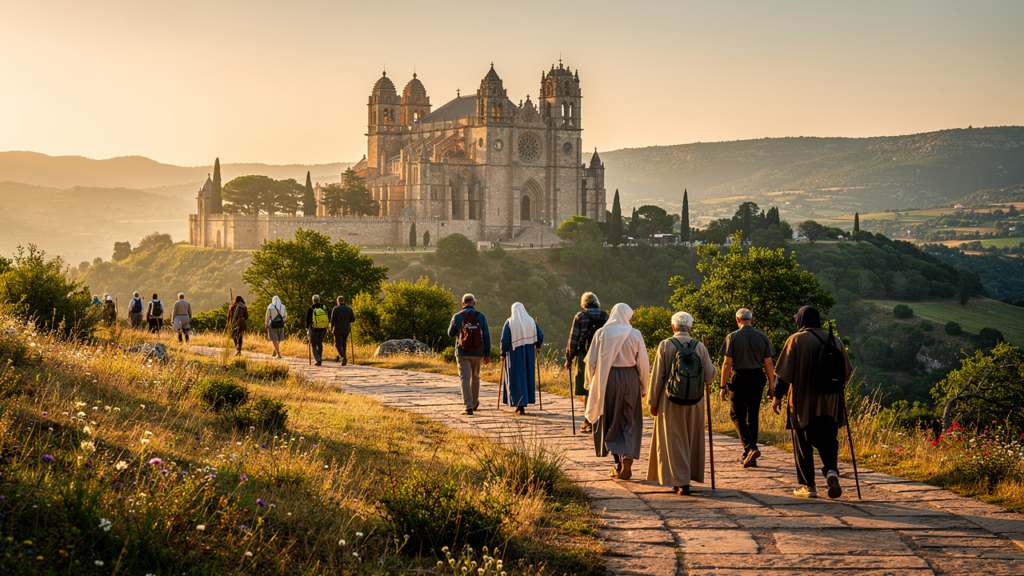
Pilgrimage represents a unique form of religious tourism that combines spiritual motivations with a full tourist experience. Unlike conventional tourism, pilgrimage routes focus on sacred sites and journeys that carry deep religious or spiritual meaning. The activity includes visiting holy places, participating in religious ceremonies, and sometimes extended walking along fixed routes. Despite the spiritual motivation, pilgrims still require tourism services such as accommodation, transportation, and information about the sites.
The field has been growing significantly in recent years as interest in spirituality and the search for meaning has increased. According to the UN World Tourism Organization (UNWTO), approximately 600 million national and international religious and spiritual journeys take place around the world each year — with Europe accounting for around 40% of those trips. Many sites around the world are investing in dedicated infrastructure for pilgrims while preserving the religious character of the place.
Leading Pilgrimage Destinations in the World
The Camino de Santiago in Spain is considered one of the most famous pilgrimage routes in the world. The route stretches hundreds of kilometres and in 2025 reached a new all-time record, with over 530,000 pilgrims receiving the Compostela certificate — a 6% increase over 2024 and 90% more than a decade ago. Jerusalem serves as a pilgrimage centre for all three monotheistic religions, with the Western Wall, the Church of the Holy Sepulchre, and the Temple Mount all within walking distance of each other. Varanasi in India serves as an ancient pilgrimage centre for Hinduism, and Mecca for Muslims during the Hajj.
Additional destinations include Lourdes in France, Fátima in Portugal (which welcomed 6.2 million pilgrims in 2024), and Lhasa in Tibet. Each destination offers a different experience tailored to its specific religious tradition and the needs of its pilgrims.
The Difference Between a Pilgrim and a Regular Tourist
A pilgrim is driven primarily by spiritual, religious, or philosophical goals, while a regular tourist seeks entertainment, relaxation, or general cultural enrichment. A pilgrim is willing to invest greater physical and mental effort, forgo comfort, and dedicate more time to a single activity. They focus on a particular site or specific route and are less interested in a variety of activities. Religious tourism is also characterised by marked seasonality tied to holidays and sacred periods.
That said, the boundary between the categories becomes increasingly blurred when people without a religious background visit sacred sites out of cultural curiosity or a search for an undefined spiritual experience. On the Camino de Santiago in 2025, for instance, 233,182 pilgrims cited religious reasons, while 169,061 gave "other reasons" and nearly 98,000 described themselves as non-religious — reflecting the broad, inclusive appeal of modern pilgrimage.
Special Services for Pilgrims
The tourism industry adapts unique services for the pilgrim audience. Hotels near sacred sites offer religious accommodations such as kosher or halal food, prayer rooms, and directions to holy places. Transportation companies operate dedicated lines to religious sites and offer packages that include guides familiar with the religious history.
Pilgrim lodging in specialised hostels, training services for extended journeys, and spiritual guidance are all part of the unique offering. There are also information centres that specialise in religious topics and pilgrimage routes. For expert-guided pilgrimages and religious tours, Talya Tours https://www.talyatours.com/offers professionally curated itineraries to the world's most significant holy sites.
| Service Type | Regular Tourism | Pilgrim Tourism |
|---|---|---|
| Accommodation | Standard hotels and guesthouses | Pilgrim hostels, hotels with religious adaptations |
| Food | Varied restaurants | Kosher, halal, vegetarian according to faith |
| Guidance | General tour guides | Guides with specialised religious knowledge |
| Transportation | Regular transport lines | Dedicated shuttles to sacred sites |
Management Challenges at Sacred Sites
Sacred sites face unique challenges related to managing large visitor flows while preserving the sanctity of the place. Overcrowding can harm both the spiritual experience and ancient infrastructure. The International Union for Conservation of Nature (IUCN) emphasises in its guidelines the importance of balancing public access with the protection of sacred sites and their spiritual values.
Additional challenges include conflicts between different religious groups, the need for staff trained in religious matters, and developing infrastructure that complies with religious rules. Managing visitor flow requires coordination with local religious leadership.

The Economic Impact of Religious Tourism
Religious tourism is a significant source of income for many communities around the world. Pilgrims tend to stay longer at a destination and spend higher amounts on specialised services. The global religious tourism market was valued at approximately USD 286.6 billion in 2024 and is projected to reach USD 671.9 billion by 2030, growing at a compound annual growth rate of 15.6%, according to Grand View Research. The Hajj and Umrah pilgrimages alone bring approximately USD 12 billion to Saudi Arabia's economy each year.
These revenues support the preservation of historical sites, the development of local communities, and the employment of locals in guiding, hospitality, and services. However, over-reliance on religious tourism can create economic vulnerability in times of crisis.
The Future of Religious Tourism
Religious tourism is expected to continue growing in the coming years, particularly with the development of alternative spirituality and growing interest in cultural heritage. New technologies such as augmented reality enable richer experiences at sacred sites, while social media broadens exposure to pilgrimage routes. The 2025 Maha Kumbh Mela in Prayagraj, India, illustrated the extraordinary scale of faith-based gatherings, with local authorities reporting hundreds of millions of ritual visits over 45 days.
Sustainability challenges and the preservation of the authenticity of holy places will continue to occupy industry operators. Developing new routes and improving accessibility for people with disabilities are additional expected trends.
FAQ
What is the difference between pilgrimage and regular religious tourism?
Pilgrimage focuses on a personal spiritual journey with a clear religious purpose, often involving significant physical and mental effort. Regular religious tourism can be a brief visit to a sacred site out of cultural or historical interest, without deep spiritual commitment.
How do sacred sites cope with visitor overcrowding?
Sacred sites use a range of measures such as limiting visitor numbers, setting defined visiting hours, creating guided routes, and establishing information centres that distribute the load. Investment in improved infrastructure and efficient transportation is also common.
What do special services for pilgrims include?
Services include adapted accommodation with prayer rooms and religious food, specialist guidance in religious history, dedicated transportation to sacred sites, spiritual and physical preparation services for extended journeys, and information centres specialising in religious topics.
How does religious tourism affect the local economy?
Religious tourism brings significant income to local communities through specialised hotels, restaurants, guiding services, and the sale of religious goods. Pilgrims tend to stay longer and spend more on specialised services, which supports site preservation and community development.